

The Shift No One Took Seriously—Until It Was Too Late
For years, console gaming was seen as the “real” gaming industry. Big budgets, cinematic storytelling, blockbuster releases—this was where prestige lived. Mobile games, by contrast, were dismissed as casual distractions. Something you played while waiting in line.
That perception didn’t just age poorly—it collapsed.
What looked like a side market has become the dominant force in gaming. And not by a small margin. Mobile didn’t just catch up to consoles—it outscaled, out-earned, and outmaneuvered them.
By the mid-2020s, mobile gaming wasn’t competing anymore. It was setting the rules.
The Pandemic Acceleration: A Perfect Storm
The global lockdowns of the early 2020s didn’t create mobile gaming dominance—but they accelerated it dramatically.
Suddenly, billions of people were:
- Stuck at home
- Spending more time on devices
- Looking for low-friction entertainment
Consoles did benefit. Sales jumped, engagement increased, and major titles performed well.
But mobile games had an unfair advantage: they were already in people’s pockets.
There was no barrier to entry. No $500 hardware. No downloads measured in tens of gigabytes. Just tap and play.
That difference mattered more than anyone expected.
The Economics That Changed Everything
The real reason mobile games crushed consoles isn’t just accessibility—it’s economics.
Mobile gaming operates on a fundamentally different business model:
Free-to-play.
Instead of charging upfront, mobile games remove the initial cost entirely and monetize later through:
- In-app purchases
- Cosmetic upgrades
- Progress boosts
- Time-saving mechanics
This flips the traditional model on its head.
Console gaming asks:
“Will you pay $60 before you play?”
Mobile gaming asks:
“Will you keep playing—and eventually spend?”
That subtle shift massively increases the potential audience.
Scale: The Advantage Consoles Could Never Match
By the mid-2020s, smartphone users numbered in the billions. That alone gave mobile gaming an unmatched distribution network.
Even at its peak, no console generation came close.
Mobile games didn’t need to sell hardware. They piggybacked on devices people already owned.
That meant:
- Instant global reach
- Lower acquisition barriers
- Continuous user growth
When you combine that scale with free entry, the result is predictable: explosive revenue.
At one point, mobile gaming revenues surpassed $100 billion annually—more than triple the combined earnings of major console platforms.
That wasn’t a temporary spike. It was a structural shift.
Marketing Mastery: The Hidden Weapon
One of the least understood advantages of mobile gaming is how sophisticated its marketing became.
Mobile game publishers didn’t just advertise—they engineered acquisition systems.
Two metrics became central:
- Cost per install (CPI)
- Lifetime value (LTV)
The entire business revolves around a simple equation:
If the revenue generated by a player exceeds the cost to acquire them, scale aggressively.
During the pandemic, something unusual happened: advertising costs dropped sharply as other industries pulled back spending.
Mobile gaming companies moved in fast.
They increased ad spend while prices were low, acquiring millions of users at a discount. It was a land grab—and the companies that moved decisively captured enormous market share.
The “Money Machine” Model
By the mid-2020s, mobile gaming had become something closer to a financial system than a traditional entertainment industry.
Publishers constantly test:
- Ad creatives
- Target audiences
- Pricing strategies
- Game mechanics
Everything is measured, optimized, and refined.
The goal isn’t just to make a good game. It’s to build a system that reliably converts attention into revenue.
Some insiders describe it bluntly: an arbitrage machine.
That doesn’t mean the games aren’t enjoyable—but it does mean they are designed with monetization deeply embedded from the start.
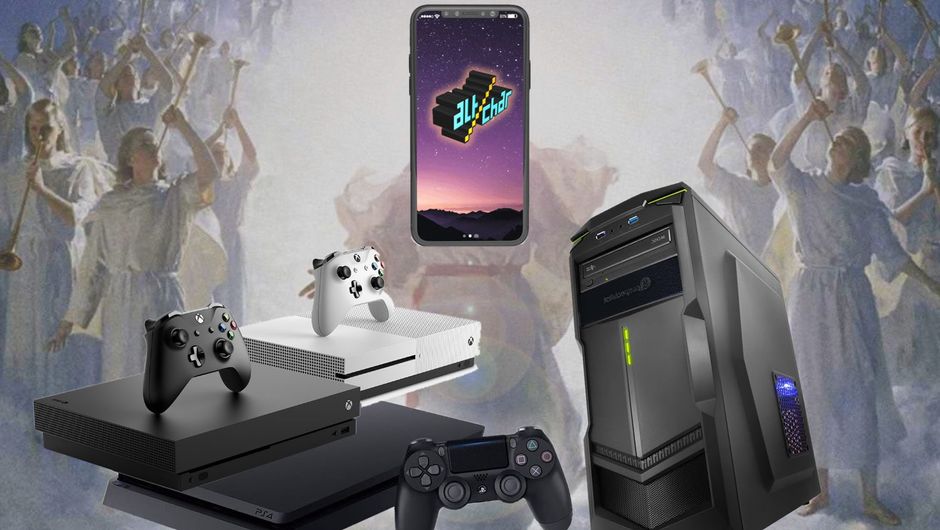
Why Console Games Couldn’t Keep Up
Console gaming still produces massive hits. Titles like open-world epics and competitive shooters generate billions.
But outside of the biggest franchises, many console and PC games struggled to match the growth seen in mobile.
There are a few reasons for that:
First, development cycles are long. A console game can take years to build, with enormous budgets and high risk.
Second, pricing is rigid. You either buy the game—or you don’t.
Third, player engagement is less continuous. Once a game is completed, many players move on.
Mobile games solved all three problems:
- Faster iteration cycles
- Continuous monetization
- Endless content updates
The Rise of “Live Operations”
One of the most important innovations in mobile gaming is the concept of live operations.
Instead of releasing a finished product, developers treat games as ongoing services.
They constantly update:
- New levels
- Seasonal events
- Limited-time rewards
- Social features
This keeps players engaged for months—or even years.
What’s surprising is how durable this model became.
Many of the top-grossing mobile games stayed at the top for years, defying the old belief that gaming was purely hit-driven.
Sustaining a hit became more valuable than creating a new one.
Consolidation: Buying Growth Instead of Building It
As the market matured, another trend emerged: consolidation.
Large gaming companies began acquiring successful mobile studios instead of trying to replicate their success internally.
Why?
Because building a hit from scratch is unpredictable and expensive.
Buying an existing success is faster—and often cheaper.
This led to billion-dollar acquisitions and rising valuations for studios with proven games.
Owning a single dominant title became incredibly valuable.
Social Features: The Next Retention Layer
As competition increased, mobile games evolved beyond solo experiences.
Developers began focusing heavily on:
- Social interaction
- Community features
- Real-time competition
- Shared progression systems
The logic is simple:
People don’t just play games—they stay for other people.
This became especially important during lockdown periods, when games doubled as social spaces.
And even after restrictions eased, many players didn’t leave.
The Psychological Edge
There’s a harder truth behind mobile gaming’s success: it understands human behavior extremely well.
Mechanics are designed to:
- Encourage daily return
- Reward small actions
- Create progression loops
- Trigger emotional responses
This isn’t accidental. It’s tested, measured, and optimized.
Console games aim for immersion.
Mobile games aim for retention.
And retention, over time, wins.
What Happens Next?
Even as the world moved past lockdowns, mobile gaming didn’t slow down.
If anything, it became more dominant.
Looking forward, several trends are shaping the next phase:
- Deeper AI integration in game design
- More personalized gameplay experiences
- Expansion into emerging markets
- Cross-platform ecosystems blending mobile and console
Consoles aren’t disappearing—but they are no longer the center of the industry.
Final Takeaway
Mobile games didn’t crush consoles overnight. They did it gradually, then suddenly.
By removing friction, mastering monetization, and scaling globally, they built an advantage that traditional platforms couldn’t match.
The real lesson is bigger than gaming:
The platform that reaches the most people, with the least resistance, and keeps them the longest—wins.
And right now, that platform fits in your pocket.

