

Virtual Reality (VR) has moved far beyond its early association with gaming and entertainment. In manufacturing education, it is increasingly treated as a serious training infrastructure rather than an experimental add-on. A growing number of scoping reviews and applied studies now position VR as a key component in modern industrial learning systems, especially where safety, precision, and repeatability matter.
What makes VR particularly relevant in manufacturing is not just its immersive quality, but its ability to replicate complex, high-risk, or expensive environments without physical consequences. Learners can enter a fully simulated factory floor, interact with machines, and repeat procedures as many times as needed, all while being monitored and guided through structured learning objectives. Over time, this has shifted VR from a novelty into a practical educational tool used across vocational training centers, universities, and large industrial corporations.
From Experimental Simulations to Industrial Learning Systems
The early stages of VR in manufacturing education were heavily constrained by cost and hardware limitations. Systems were often custom-built for specific industries such as aerospace or defense, and were rarely scalable. Training simulations existed, but they were isolated, expensive, and difficult to update. In many cases, they functioned more as demonstrations than as fully integrated educational tools.
This changed significantly with the rise of consumer-grade VR hardware and more powerful real-time rendering engines. Suddenly, it became possible to build realistic factory environments that could run on relatively accessible devices. At the same time, manufacturing industries were facing increasing pressure to improve training efficiency, reduce workplace accidents, and standardize skill development across global teams. VR began to align with these needs in a way earlier technologies could not.
Today, VR is often embedded directly into structured training pipelines. Instead of replacing traditional instruction entirely, it is used to prepare learners before they enter real production environments, reducing both risk and onboarding time.
How VR Is Used in Manufacturing Education Today
In modern manufacturing training environments, VR is primarily used to simulate real-world industrial processes with high fidelity. One of its most common applications is assembly line training, where learners practice step-by-step procedures in a controlled virtual environment. This allows them to understand sequencing, tool handling, and quality control before working with actual equipment. In industries like automotive manufacturing, this has become especially valuable, as it reduces early-stage production errors and shortens onboarding cycles.
Safety training is another area where VR has become deeply integrated. Instead of learning about hazards through manuals or lectures, trainees can experience simulated emergencies such as machinery failures, fire outbreaks, or chemical exposure scenarios. The psychological impact of experiencing these situations in a safe environment significantly improves knowledge retention and situational awareness.
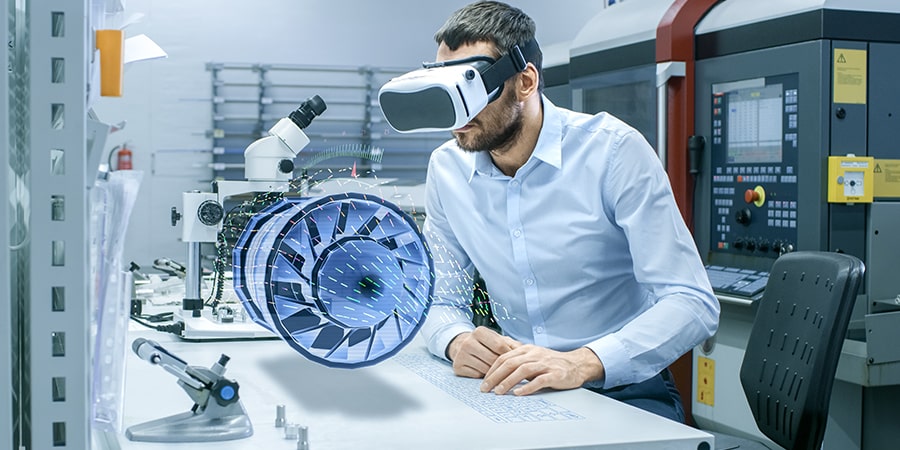
Maintenance and repair training also benefits strongly from VR systems. Complex machinery can be disassembled and reassembled virtually, allowing learners to develop procedural memory without the constraints of physical equipment availability. This is particularly important in high-cost industrial environments where real machines cannot be easily taken offline for training purposes.
In more advanced manufacturing settings, VR is also used to train operators working with robotics and automated systems. Here, the focus is not only on mechanical interaction but also on programming, calibration, and system diagnostics. This reflects a broader shift in manufacturing education toward hybrid skill sets that combine physical operations with digital system control.
Educational and Cognitive Benefits of VR Training
One of the most consistently reported advantages of VR in manufacturing education is improved retention of learned material. Because VR engages multiple sensory channels at once—visual, spatial, and sometimes motor-based interaction—learners tend to form stronger cognitive associations compared to traditional classroom-based instruction. This makes procedural knowledge particularly durable, especially for tasks that require repetition and precision.
Another important benefit is the reduction of real-world risk during training. Manufacturing environments often involve heavy machinery, electrical systems, and hazardous materials. VR allows trainees to make mistakes without consequences, which is critical for early-stage learning. Instead of avoiding errors out of fear, learners can experiment, fail, and improve in a controlled environment.
There is also a clear operational advantage in terms of cost efficiency over time. Although VR systems require significant initial investment in hardware and simulation development, they reduce long-term costs associated with physical materials, machine downtime, and instructor-led repetition. In large organizations, this can translate into substantial savings, especially when training is scaled across multiple locations.
Standardization is another key advantage. Traditional training can vary depending on instructors, facilities, or regional practices. VR environments, by contrast, deliver identical experiences to every learner, ensuring consistency in skill acquisition across the organization.
Persistent Challenges and Structural Limitations
Despite its advantages, VR in manufacturing education is not without limitations. One of the most significant barriers remains cost. Developing high-quality simulations requires detailed modeling of industrial environments, specialized software development, and ongoing maintenance. For small and medium-sized enterprises, these costs can be prohibitive.
Technical limitations also persist. Even modern VR systems can cause discomfort for some users, including motion sickness and fatigue during extended sessions. Hardware constraints such as limited field of view or reduced tactile feedback can also affect realism, particularly in tasks that require fine motor skills or physical force.
Another issue is the lack of standardized frameworks for VR training content. Different platforms often use incompatible systems, making it difficult to transfer training modules between organizations or update them consistently. This fragmentation slows down large-scale adoption.
There is also an ongoing question about how well VR-trained skills transfer to real-world environments. While procedural tasks tend to translate effectively, more complex physical interactions sometimes require additional real-world practice to fully master. This reinforces the idea that VR is best used as a preparatory tool rather than a complete replacement for hands-on training.
Finally, organizational readiness plays a role. In many manufacturing contexts, instructors and managers may not have sufficient training or familiarity with VR systems, which slows down adoption and limits effective integration into existing curricula.
Differences Across Domains, Educational Levels, and Organizations
The effectiveness and adoption of VR in manufacturing education vary significantly depending on context. In automotive and aerospace industries, VR is often deeply integrated into training pipelines due to the complexity and safety requirements of production systems. Electronics manufacturing tends to focus more on precision-based tasks, where VR helps develop fine motor skills and procedural accuracy.
At the educational level, vocational training institutions are currently the most active adopters, using VR to prepare students for direct entry into industrial roles. Universities are increasingly incorporating VR into engineering programs, although often in pilot or experimental formats rather than full-scale deployment. In corporate environments, large manufacturers are leading adoption, while smaller organizations adopt VR more selectively due to resource constraints.
These differences highlight an important point: VR in manufacturing education is not a uniform solution, but a flexible tool whose value depends heavily on how and where it is implemented.
Emerging Directions and Future Development
The future of VR in manufacturing education is closely tied to advancements in artificial intelligence, digital twins, and cloud computing. AI-driven systems are beginning to enable adaptive training environments that adjust difficulty based on learner performance, creating more personalized learning paths.
Digital twin technology is also becoming increasingly important. By linking VR training environments directly to real-time data from physical factories, organizations can create highly accurate simulations that reflect actual production conditions. This improves both realism and relevance.
Haptic feedback systems are another emerging area, aiming to restore the sense of touch in virtual environments. This could significantly improve training quality for tasks that rely on physical manipulation.
Cloud-based VR platforms are also expanding accessibility by reducing the need for high-end local hardware. This opens the door for more scalable deployment across distributed workforces.
Conclusion
Virtual Reality in manufacturing education has evolved into a mature but still developing field that sits at the intersection of technology, pedagogy, and industrial practice. It offers clear advantages in safety, efficiency, and skill development, particularly in environments where traditional training is costly or risky.
At the same time, it remains constrained by technical, economic, and organizational challenges. The most realistic trajectory is not full replacement of conventional training methods, but a hybrid model where VR serves as a powerful preparatory and reinforcement tool.
As supporting technologies continue to mature, VR is likely to become an increasingly standard component of manufacturing education systems worldwide, shaping how industrial skills are learned and maintained across generations of workers.

