

Meta has walked back its earlier decision to shut down VR support for Horizon Worlds, with the company now confirming that the platform will continue operating in virtual reality for existing users. The reversal comes just days after internal communications suggested a full VR phase-out in favor of mobile-only access.
According to Meta CTO Andrew Bosworth, the company changed direction after receiving strong user feedback. In a video Q&A posted on Instagram, he said the decision was made recently and reflects ongoing demand from the existing VR community.
“We have decided, just today in fact, that we will keep Horizon Worlds working in VR for existing games, to support the fans who reached out,” Bosworth said.
The announcement marks another shift in Meta’s long and uneven strategy around immersive virtual worlds, which have oscillated between aggressive investment and cautious scaling back since the company rebranded from Facebook and doubled down on the metaverse vision.
From Shutdown Notice to Reversal in Days
Earlier in the week, Meta had informed users that Horizon Worlds in VR would be discontinued by June 15, with the experience continuing only on mobile devices. That message aligned with broader cost-cutting efforts across Reality Labs, Meta’s VR and AR division, which has faced layoffs and restructuring in recent months.
However, the company has now clarified that while mobile will remain a priority, VR access will not be fully removed for existing content.
Meta’s revised stance means:
- Existing VR games and worlds will remain accessible
- Users can still download and use Horizon Worlds in VR
- No new major investments or game development are planned
- Creation of new worlds may be restricted in the future (timeline unclear)
What has not changed is Meta’s broader strategic pivot: Horizon Worlds is no longer positioned as a flagship growth product.
A Platform in Strategic Retreat, Not Expansion
While the reversal may sound like a win for users, Meta’s own statements suggest a different reality. The company is effectively maintaining Horizon Worlds in a “maintenance mode” state rather than actively expanding it.
A Meta spokesperson confirmed that:
- Existing user-created worlds will remain available
- No new features or large-scale updates are planned for VR
- The focus is shifting toward mobile experiences and selected live events, such as virtual concerts
Meta added that immersive concerts are still supported through the Quest ecosystem via its TV app, with new events planned as part of a broader content lineup.
This positions Horizon Worlds less as a growing metaverse platform and more as a legacy service being gradually wound down while still kept functional for its existing audience.
Industry Context: The Metaverse Pullback Continues
Meta’s shifting position reflects a wider cooling of enthusiasm for consumer-facing metaverse platforms. After years of heavy investment into VR social spaces, many companies have scaled back ambitions as user growth and engagement have failed to match expectations.
Analysts note that Meta’s Reality Labs division has been under sustained pressure to justify its spending, particularly as the company refocuses on AI and core advertising revenue.
IDC research manager Jitesh Ubrani described the uncertainty around Horizon Worlds’ future bluntly:
“ ‘For the foreseeable future’ does not sound like a ringing endorsement that this is going to stay around forever.”
The phrasing reflects a broader industry trend: platforms are increasingly avoiding firm long-term commitments to VR social ecosystems, instead favoring hybrid or mobile-first approaches.
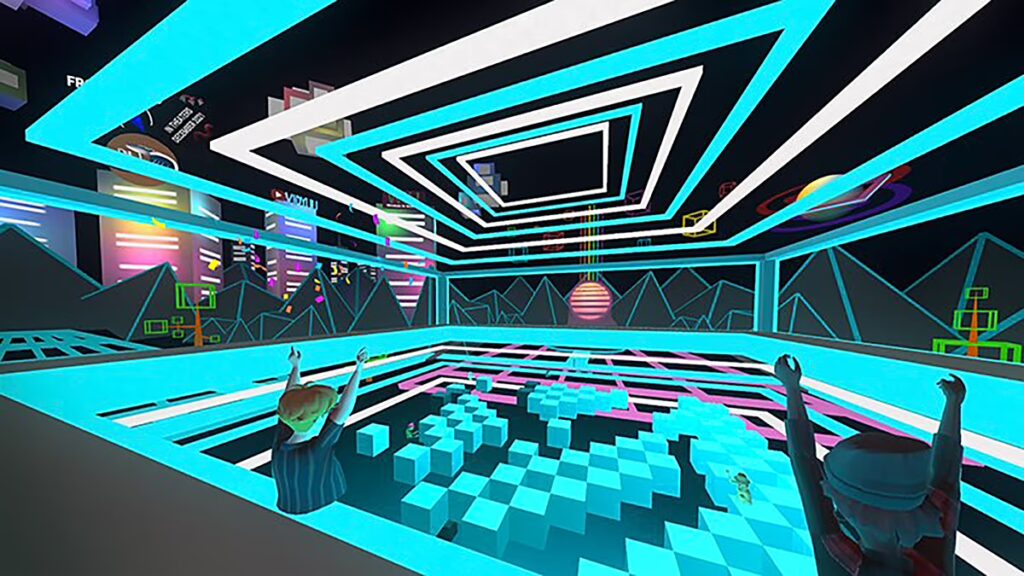
What Horizon Worlds Is Now
Horizon Worlds is a VR-based social platform where users can build and explore interactive 3D environments, play mini-games, and socialize through avatars. It has often been compared to earlier virtual worlds like Second Life, but designed for VR headsets such as Meta Quest devices.
At its peak, Meta positioned it as a central pillar of its metaverse strategy. However, adoption challenges, technical limitations, and competition from other social platforms have limited its mainstream breakout.
Today, Horizon Worlds exists in a more constrained form:
- VR access remains for legacy users
- Mobile expansion is prioritized
- Creator tools are limited or frozen
- Long-term roadmap remains unclear
Why Meta Changed Direction
The reversal appears to be driven by a mix of user retention concerns and strategic repositioning.
Key factors include:
1. User backlash
VR communities pushed back strongly after shutdown plans were announced, arguing that removing VR support would effectively dismantle the core experience.
2. Strategic refocus on mobile
Internal signals suggest most user engagement has shifted toward mobile experiences rather than VR hardware.
3. Reality Labs restructuring
Meta has been reducing costs and tightening focus across its VR division amid broader company efficiency efforts.
4. Limited growth in VR social spaces
Despite investment, Horizon Worlds has not achieved the scale Meta originally projected.
A Familiar Pattern in Meta’s Metaverse Strategy
This is not the first time Meta has adjusted its VR roadmap after signaling major changes. The company has previously scaled back or restructured several immersive initiatives, including fitness and social VR experiments, while preserving limited versions of products to avoid abrupt shutdowns.
In parallel, Meta continues to promote VR hardware like Quest headsets, but increasingly ties them to entertainment, fitness, and mixed reality use cases rather than fully persistent virtual worlds.
What Happens Next
For now, Horizon Worlds remains operational in VR—but with clear limitations. Users can expect stability rather than expansion, with future updates likely focused on maintenance, not innovation.
The long-term trajectory remains uncertain. Industry analysts suggest that unless user engagement increases significantly, Horizon Worlds will continue evolving into a legacy platform rather than a central pillar of Meta’s metaverse vision.
What Meta is signaling, intentionally or not, is a gradual retreat from the idea of a fully realized consumer metaverse—at least in its original form.
For users, that means one thing: the world inside Horizon Worlds is staying open, but it is no longer being built outward at the same pace.

